
Do You Know How Much a Stolen Social Security Number Costs? The Answer Will Surprise You.
THE SHORT ANSWER
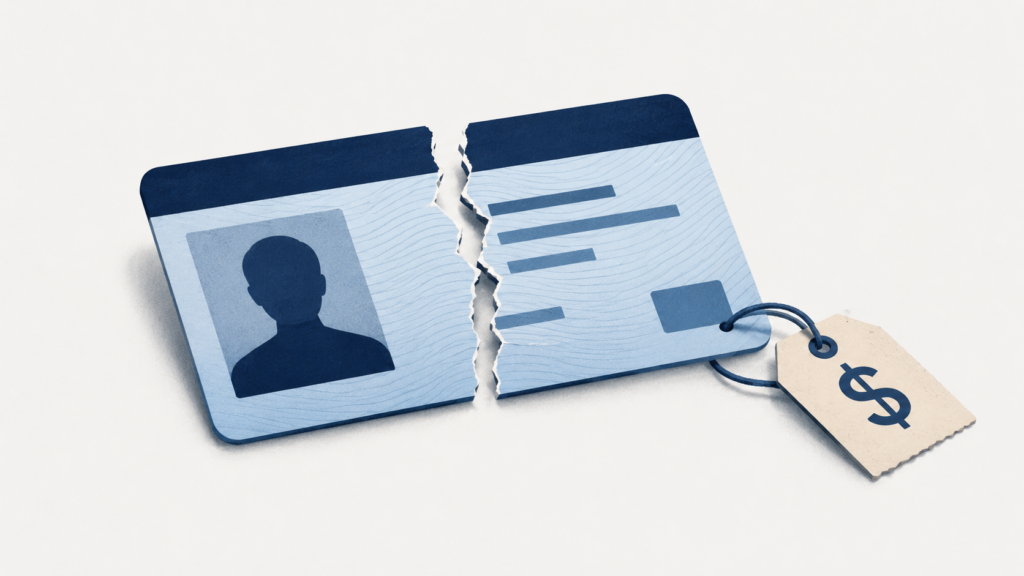
A stolen Social Security number sells for as little as $1 to $8 on dark web marketplaces. Not thousands. Not hundreds. A single dollar, sometimes less if bought in bulk. The number that anchors your credit, your tax filings, your medical insurance, and your entire financial identity is, on its own, one of the cheapest items criminals trade. That cheapness is not good news. It exists because so many SSNs have already been stolen that supply far outpaces demand, and a low individual price means criminals buy in volume and combine your SSN with other stolen details to build a complete profile that sells for far more and does far more damage.
IT Accuracy | Managed IT Services, Los Angeles | Date: June 30, 2026 | 8 min read
AT A GLANCE
Here is the number most people get wrong: a stolen Social Security number, on its own, sells for $1 to $8 on dark web marketplaces. Some sellers offer bulk discounts that push the per-unit price even lower. Your SSN, the number tied to your entire financial identity, is one of the cheapest things being sold.
So How Much Is a Social Security Number Actually Worth?
This is not a typo, and it is not a sign that your SSN is unimportant. It is a sign of supply and demand operating exactly the way you would expect in any market with too much inventory. Compare it to other items on the same marketplaces. A forged physical passport can sell for up to $3,000. Stolen corporate VPN credentials sell for $500 to $3,000 or more.
Single SSN
$1–$8
Sold alone, bulk discounts available
Full Identity (“Fullz”)
$20–$100
SSN + name + DOB + more
Corporate VPN Login
$500–$3,000+
Access to an entire business system
Why Is Something So Sensitive So Cheap?
The honest answer is that there are simply too many stolen Social Security numbers in circulation for any single one to command a high price. Security researchers estimate that 60 to 80 percent of Social Security numbers in the United States have already been exposed in some data breach, a figure that predates the 2017 Equifax breach alone, which exposed 147 million people’s information. Breaches since then, including a 2024 incident involving a data broker that reportedly exposed 2.9 billion records, have only added to the glut.
When something is abundant, its individual price falls. That is true of stolen data the same way it is true of any commodity. A criminal does not need to pay a premium for your SSN specifically when millions of other SSNs are available at the same low price.
If It Is So Cheap, Why Does It Still Matter?
This is the part that gets missed in most coverage of dark web pricing, and it is the part that actually matters to you or your business.
A bare SSN sold alone is a low-value item precisely because it does not do much on its own. What turns a cheap number into a serious threat is combination. Criminals buy SSNs in bulk specifically because they plan to pair each one with a name, a date of birth, an address, sometimes a mother’s maiden name or a driver’s license number, to build what the criminal underground calls a “fullz” package, short for “full identity.” A fullz package sells for $20 to $100, ten to twenty times the price of the SSN alone, because it is far more useful for opening fraudulent accounts, filing false tax returns, or claiming medical benefits in someone else’s name.
Unlike a password or a credit card number, a Social Security number cannot be changed once it is exposed. A compromised password gets reset. A stolen credit card gets canceled and reissued. Your SSN is permanent. That permanence is exactly why even a one-dollar leak today can still be used against you or your employees five or ten years from now.
What This Means If You Run a Business
If your business collects Social Security numbers from employees, contractors, or clients, for payroll, tax forms, background checks, or insurance enrollment, you are holding a stockpile of exactly the kind of data this market runs on. The low individual resale price does not mean low risk to your business. It means the opposite: criminals do not need a sophisticated, high-value target to make stealing SSNs worthwhile. Volume makes up for low unit price, and a payroll database with five hundred employee SSNs in it is a five-hundred-unit haul regardless of what each one sells for individually.
This is also where the price gap matters for your own risk assessment. Corporate credentials, VPN logins, admin access, cloud account access, sell for $500 to $3,000 or more on the same marketplaces, hundreds of times the price of a single SSN. That price difference tells you where criminals see the bigger payoff: not in stealing one person’s identity, but in stealing the credentials that let them into a business’s entire system, where the SSNs, financial records, and client data all live in one place.
Why criminals target credentials, not just records
SSN exposure rate
60–80%
Of U.S. SSNs already exposed in some breach
2024 data broker incident
2.9B
Records reportedly exposed in a single breach
What to Do With This Information
Practical steps for your business
IT Accuracy — Managed IT Services, Los Angeles
The dark web pricing gap shows you exactly what to protect first.
A single SSN is cheap because it is common. Your business’s system access is expensive because it is the door to everything at once: payroll records, client SSNs, financial data, and more, in a single breach. IT Accuracy works with Los Angeles businesses to protect exactly the kind of access this market is built on.
Cybersecurity topic cluster: related reading

Managed IT Services | Los Angeles, CA
IT Accuracy provides cybersecurity and security awareness training, managed network services, cloud solutions, and help desk support for businesses across Los Angeles and nationwide.